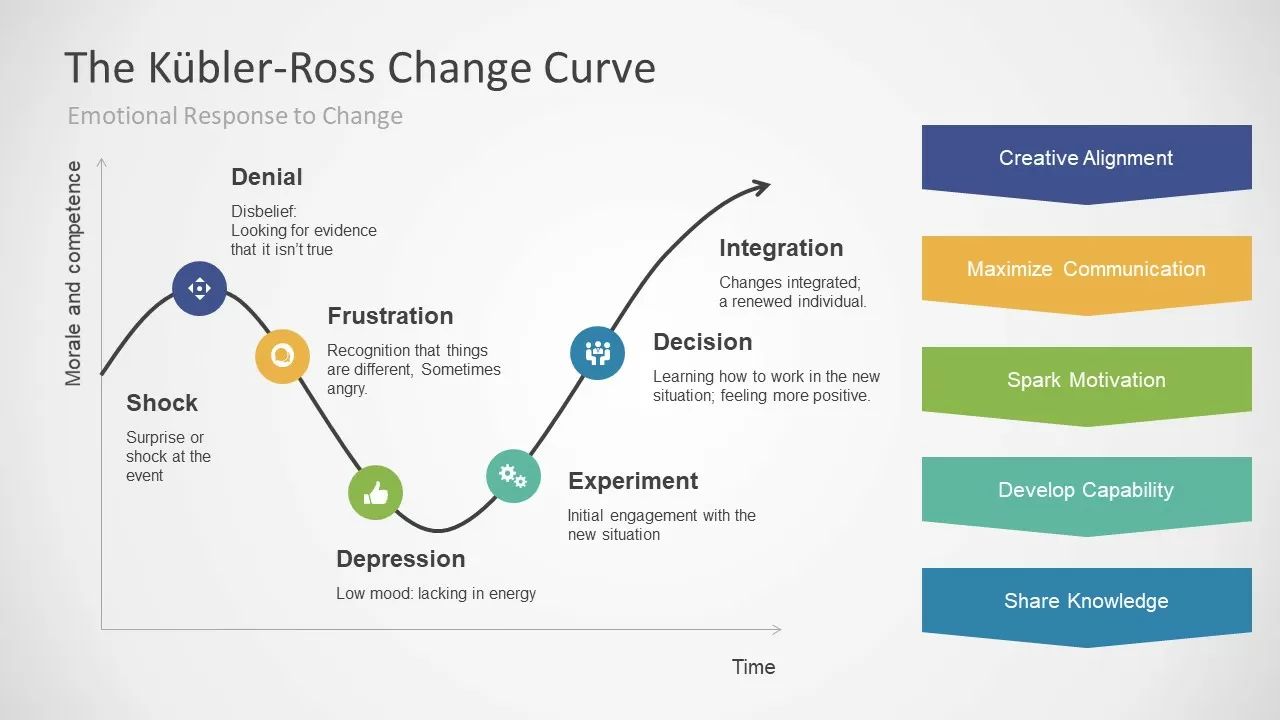
• The only thing I can say with certainty is there will be change.

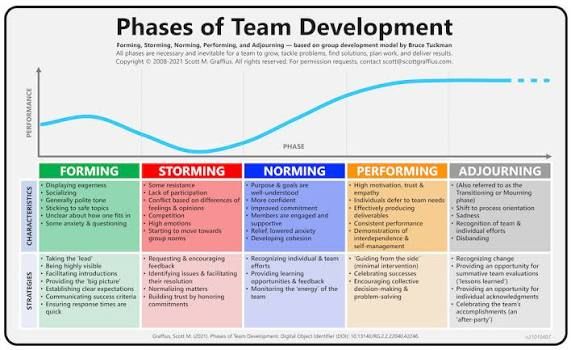
    This was my opening line to our first team development time with our 2 new team members. It can be hard to find time to spend on being a team among all the doing. But that time is key.
    What was warming to see was the existing team members saying, with honesty, that they didn’t really get why we did this exercise first time round. But now, having seen the results, they know it is important if we are going to deliver. Even if it did take them away from deadlines.

    We are an in house marketing function. Our own in house agency. We are the creative and the communicator. We live our clients pains and gains and are the voice of the client and the end user in our complex scaling business.

    To perform as we need to, we need that solid foundation of trust and respect. Of psychological safety to push the envelope. To challenge. To do the right thing. And to perform at a high standard.
    I am fortunate to have worked with, and led some, extremely talented people in high performing teams in my career.

    Here are the 3 signs for me we are there:

    🤝There is lean in by all on all the projects. Everyone feels connected and their opinion is valid.

    🤝There is a switch out of leadership. Not just one voice all the time but all taking the lead where it works. By doing our bit to aid the flight.

    🤝Autonomy and accountability is there and ‘stuff gets done’.

    My team understand my constant reference to us as ‘in flight’ and my likening us to geese, but they (most of the time) know I am not a crazy twitcher, more stealing with pride from nature’s efficiency and survival.

    https://www.wwt.org.uk/discover-wetlands/blog/why-do-geese-fly-in-v-formation-the-science-behind-the-sky-s-most-iconic-shape

    We talk about the Geese flying and take the lessons from them and apply them to us as a high performing team.

    🪶Energy efficiency through aerodynamics – when we are working as a high performing team, nobody is overlapping on work, nothing is dropped, we work at the most efficient capacity of our capabilities.

    🪶Rotating leaders prevent fatigue – no one leader, but the right leader at the right time. Taking a turn to drive things forward means the strongest flyer leads for the task and no one person is always doing the harder shift all the time.
    🪶Honking when flying – The honking helps each goose communicate its position and co-ordinate with the other geese in the V when they shift position. Even though the honking uses energy, it’s outweighed by the energy the flock save from the formation flight. – I dont think I can ever emphasise enough the need for regular communication and if you feel you are over communicating, it’s probably about the right amount.

    🪶Navigational accuracy and visual cues – flying together helps the more experienced birds pass on their learnings to the younger birds. It ensures that all the flock are learning and growing and getting safely to their destination.

    🪶Hardwired or learned – Flying in a V formation is a learned behaviour and has to be practiced to keep it working. Investing in time together to learn is important for the team.

    🪶One side of the V often longer than the other – flexing to lean in to the wind direction enables the team to respond to the constant changed and pivots, the occasional u-turn too, that comes as par for the course for any business.

    We as one team move at speed and our outputs have that thread of connection that delivers the wants, needs and small (occasionally larger) delights for the people we make them for.

    And of course, the KPIs look good and well, isn’t that just what it’s all about……….

    Fly well my friends🪽
  • Marketing is about finding the right people, understanding what the right message is to inform and influence, and then serving the messaging at the right time for that person’s journey. Easy right?!

    When done right it adds value and enriches the journey to the predetermined end goal.

    And when executed poorly, is inflammatory, insensitive and sometimes downright annoying.

    A case study in B2B marketing and scaling up a good idea at the right time for the triple win.

    At Sureserve, our amazing Southern Compliance team identified a way to add value to clients and residents by completing other checks when already visitng our residents home for their annual gas safety check.

    This met more than one need and want for our social housing landlord clients, with access to assess a challenge, and the checks becoming essential as we all work to give everyone a warm and safe home to live and thrive in.

    We worked with the fantastic client and their relationship business development team to produce helpful informative tools to support the conversation and worked across our key channels to deliver a real life case study as a webinar, speaker sessions and panel slots at key events, information on stand at events, and all enabled by digital personalisation and segmentation and targeting. We scaled the offering to be UK wide and accesible to all sizes of business.

    Clients are actively seeking us out to add the service to their existing contract.

    Most importantly, the residents engaged really positively with the idea of an annual MOT for their home, and welcome the convenience of the increased safety in one visit to minimise disturbance.

    This year, the new regulations have come in, Awaab’s Law, and we are scaled up and ready to support. Our last webinar had over 1300 sign up, 700 join, and 400 opt in to hear from us. Our tailored email campaign produced off the scale open and click through by providing additional value for our clients, their residents and us at Sureserve. The triple win.

    Cost per acquisition remains reasonable, and life time value produced beyond x1000 ROI. The campaign continues and the services and options will continue to innovate.

    https://www.sureserve.co.uk/healthy-homes-check/

  • Rebrands fail when they focus on logos and fonts alone, and don’t use strategy, insight and logic.

    Here’s what made the Sureserve rebrand work:

    1.Alignment

    2. Simplicity

    3. Relentless focus on the people

    Rebranding Isn’t About Looks

    It’s about logic.

    Too often, companies treat rebranding like a cosmetic exercise – a new logo, colour palette, or tagline. The real power of rebranding lies in strategic transformation. It’s not about changing how you look it’s about clarifying who you are and why that matters.

    According to McKinsey, companies that regularly revisit their brand strategy outperform competitors by up to 20% in long-term growth metrics. This is because effective brands force leadership teams to ask hard questions:

    ❔️Who are we serving now?

    ❔️What’s changed in our market?

    ❔️How does our purpose translate into commercial success?

    For businesses looking to scale up or pivot these questions aren’t optional – they’re essential.

    Alignment: Strategy First, Design Second

    At the heart of a successful rebrand is alignment — between business strategy, customer needs, and brand identity.When I led the rebrand of Sureserve, a leading energy services group, it wasn’t to “look fresh.”

    It was to signal a sharper commercial focus and reflect a new business direction after a period of transformation.The process started with insight gathering stakeholder interviews, customer feedback, and market data. Only after defining the strategic intent did the visual and verbal identity take shape.

    💎 Takeaway: Brand design should follow business logic, not the other way around. As Harvard Business Review notes, “A brand is a promise delivered — not a picture displayed.” (HBR, The Power of Brand Promise, 2021)

    Simplicity: Clarity Over Creativity

    When a company scales, complexity multiplies – new markets, new products, new audiences.

    Rebranding is a rare chance to simplify.The best rebrands distil what truly matters: the problem you solve, the value you deliver, and the emotional connection that drives loyalty. Brand strategists at Prophet found that brands with clear, simple narratives grow revenue 4–8% faster than their competitors (Brand Relevance Index, Prophet 2023).

    Sureserve’s new positioning did just that — replacing industry jargon with human language and aligning messaging across every channel. I wrote a brand heart thay drives every communication in the business.

    The result was a brand that felt confident, modern, and trusted — without trying too hard.

    💎 Takeaway: Simplicity doesn’t mean playing small; it means focusing where it counts.

    Focus on the People

    People. The True North of Rebranding. Every rebrand should start and end with the people who matter most. For Sureserve that was distilled in to 4 groups of people we would serve through our purpose statement that lives alongside the brand heart

    Data from Deloitte shows that customer-centric companies are 60% more profitable than those that aren’t (Deloitte Insights, 2022).

    Yet many rebrands are built around what leadership wants to say, not what customers need to hear. In Sureserve’s case, the new brand architecture and narrative were built around end-user impact — creating warmer homes, reducing energy waste, and improving community outcomes. That’s not just a marketing story; it’s a business driver.

    💎 Takeaway: If your rebrand doesn’t make life easier, clearer, or better for your audience, it’s just decoration.

    Rebranding as a Growth Strategy

    When a business pivots, expanding markets, evolving products, or acquiring new capabilities; the brand must evolve too. A well-executed rebrand is not a cost; it’s an investment in alignment, culture, and market differentiation.

    Done well, it can:

    âś… Unite teams around a common purpose

    âś… Simplify complex business portfolios

    âś… Open doors to new markets and investors

    âś… Signal maturity and credibility to stakeholders

    Final Thought

    Your brand is not a logo. It’s a living reflection of your strategy, culture, and ambition. If your business is pivoting or scaling, or even failing, a rebrand can be your most powerful growth lever – but only if it starts with insight and ends with impact.

    References:

    McKinsey & Company (2021) – The Value of Purpose and Brand Strategy in Growth

    Harvard Business Review (2021) – The Power of Brand Promise

    Prophet (2023) – Brand Relevance Index

    Deloitte Insights (2022) – Customer-Centric Transformation Study

    https://www.rglr.studio/projects/sureserve

  • How to keep focus and momentum when clarity is lacking.

    When a brand is scaling at speed the goal posts can move quickly. Sometimes daily. That swerve, pivot or u-turn can knock the rhythm for a creative team.

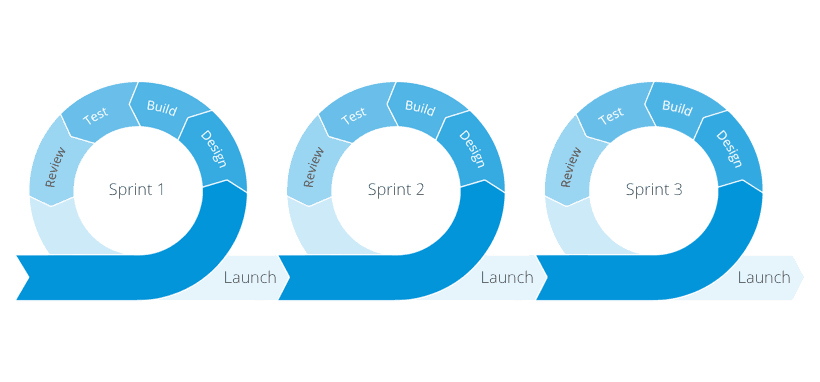
    This is when agile (yes banging on about it again) really works for marketing. Plan less. Do more. Shortening a sprint from say a month to 2 weeks or a week, or, on the particularly turbulent week, 2 days helps to keep a feeling of control and productivity.

    It can actually make you more creative as you focus on the here and now. Mindful marketing is the way to go. Being present and curious. You heard it here first.

    #marketing #Agilemethodology #creative #curious

    The sprint cycle in agile
    Sprint cycle of agile

  • Marketing used to be about awareness first, revenue second. Now it’s about revenue. You need to be across the full funnel and connected to the functions that own each next best action.


    The biggest shift I’ve seen as a marketing leader is how digital, data, and brand strategy sit at the core of commercial success. Covid 19 accelerated us, AI is enabling and we are moving forward with customer insight at full speed.


    When I first joined Philips back in 2011, marketing’s primary goal was to make people aware of a brand: ads, billboards, slogans. And I still love and admire a good piece of crafted and tested creative. Philips were pioneering in breaking the mould, using six sigma to push us to deliver the right message at the right time and be customer insight led.


    Today, my marketing practice is deeply entwined with growth levers—customer acquisition, retention, revenue models, lifetime value.
    Digital acceleration and big data have flipped the equation: rather than utilising marketing to “get people to know us,” it’s “use marketing insights to grow the business.” McKinsey saw the acceleration if full funnel when COVID sped our digital marketing capability through a decade of change in just 2 years.

    Meanwhile, brand strategy no longer sits in a silo of fluff or “nice-to-haves.” It’s recognised as an economic asset “brand strategy has shifted. Shifted to the domain of real market and tangible financial performance.” Our brand equity tracking as a marketing function is used across the business and is central to funding when scaling.  


    So what does this mean in practice?
    Data & analytics are no longer optional: you need unified platforms, real-time dashboards, integrations across sales/marketing/product. As an article by Ted Moser states: “The digital ripple effect … means marketing needs new and better customer evolution sensing systems.”


    Brand strategy must connect to business outcomes: It’s not just about identity or perception, but about shifting demand—creating more volume, commanding better price, improving margins. Win on quality, not price.


    Digital and agile marketing mean you can test, iterate, measure. The days of big campaigns with six-month lead times and vanity metrics are largely gone—leadership now demands tight alignment between marketing activities and commercial KPIs. Test, fail, learn, scale is the Mantra and failure needs to be there for innovation to happen.


    Cross-functional leadership is essential: marketing must collaborate with sales, product, finance and data teams. A leader must speak the language of brand, but also of ROI, customer lifetime value, and business model growth.


    My leadership philosophy is to question. I lead with the hypothesis: “What will drive growth?” “How might we? Then we build strategic marketing programs around that—channel mix, brand positioning, digital activation, measurement.


    I prioritise customer-centricity: leveraging data to segment, personalise, engage. In one sense, marketing is now about lifecycle orchestration rather than just campaign execution.


    I ensure brand strategy is embedded early—not tacked on. A strong brand can amplify performance marketing; performance tactics validly deployed strengthen the brand. The synergy matters.


    I drive accountability and transparency: we set up KPIs around revenue, cost of acquisition, retention, brand lift, not just impressions or clicks.


    I build and nurture teams with dual competence: creative and strategic, brand thinkers and data interpreters. Because today’s marketing leader must bridge these worlds.


    At JnJ, working in Nicorette RX and pharmacy channel, we shifted from a focus on top-of-funnel awareness campaigns to a model where marketing owned the full funnel: from lead to conversion to repeat purchase. We used data-driven insights to identify high-value customer segments, refined our brand messaging accordingly, tested activation across digital channels, and tracked revenue per customer cohort. Over 12 months we saw a around a 25 % growth per marketing invested dollar. We also won our tenders on quality and differentiation, not price.


    The role of marketing has morphed: we are growth drivers, not solely brand custodians.


    If you’re still operating with marketing as mostly awareness-first, consider this:
    Are you integrating brand and performance in your strategy?
    Is your data infrastructure enabling you to make timely decisions?
    Do your KPIs reflect business outcomes (revenue, margin, retention), not just vanity traffic or awareness?
    Are you developing your team’s mindset for this new era? Do you work agile?


    As research shows, marketing’s role is changing at its core: digitalisation, data-lead strategies, omni-channel customer journeys. They all demand a new level of commercial engagement. Of deep data driven insights. It’s where the good stuff happens. 


    In short: Marketing isn’t just a function of telling people you exist anymore. It’s about driving business results, anchored in insights, powered by technology, and accelerated by brand. The future of marketing, and the companies who win it, will be those where marketing strategy is fully integrated into commercial strategy.

    Happy to connect if you’d like to dive deeper into how I approached digital transformation over the last 10 years.