Retrofit is technical. Home is emotional. Good marketing knows the difference.
Even the word retrofit feels as though it was designed to lower the pulse. It is technically accurate, important and almost entirely devoid of emotion. Add decarbonisation pathways, asset condition data, compliance regimes, funding criteria and building-performance measures, and we have created a language that makes perfect sense to specialists while giving almost everyone else a compelling reason to think about something more interesting. Yet the work behind that language matters enormously. It affects whether people are warm, safe and healthy in their homes. It determines whether ageing buildings remain comfortable and affordable to live in. It can reduce energy consumption, improve air quality, prevent hazards and, in the most serious circumstances, protect lives. The strategic marketing challenge is not that retrofit lacks importance. It is that the language of the category disguises its importance.
Building a character to tell the story
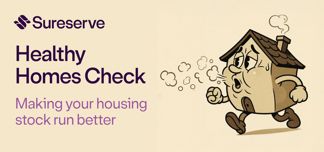
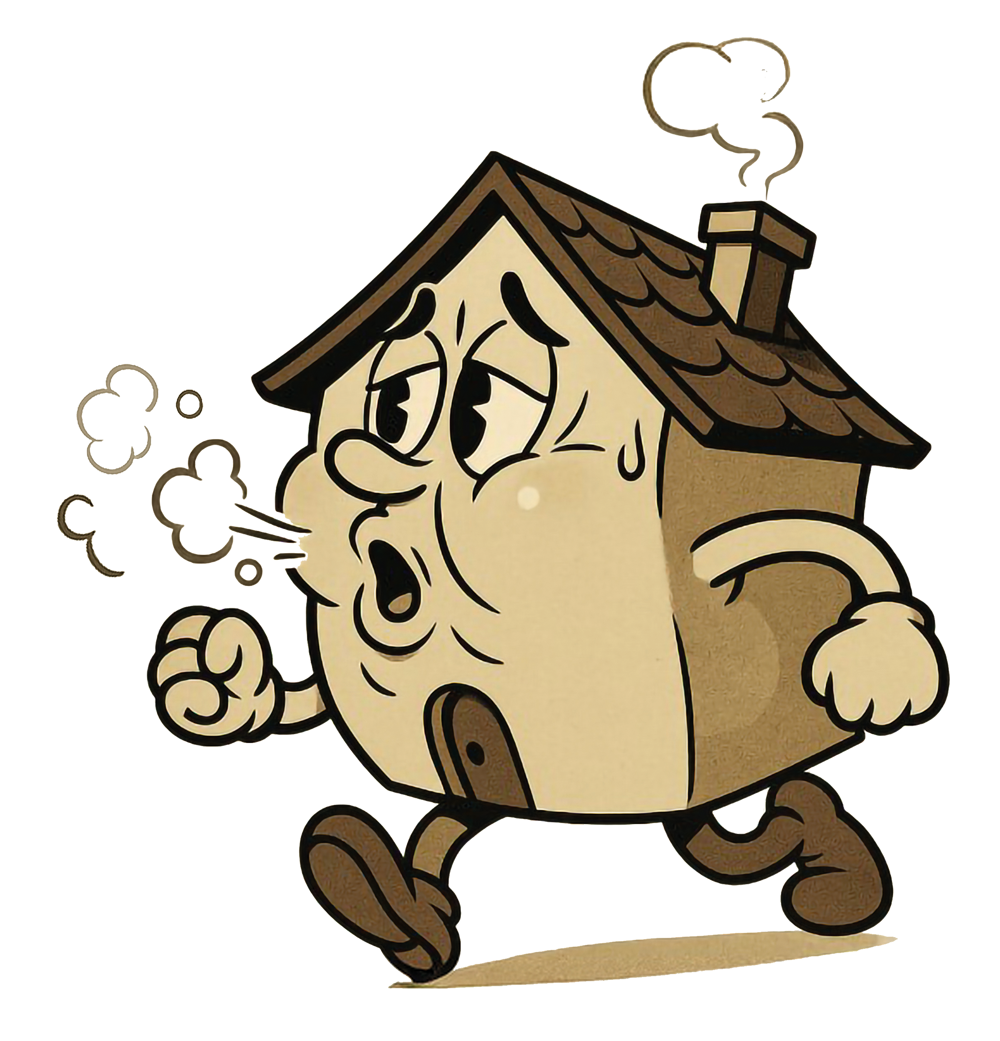
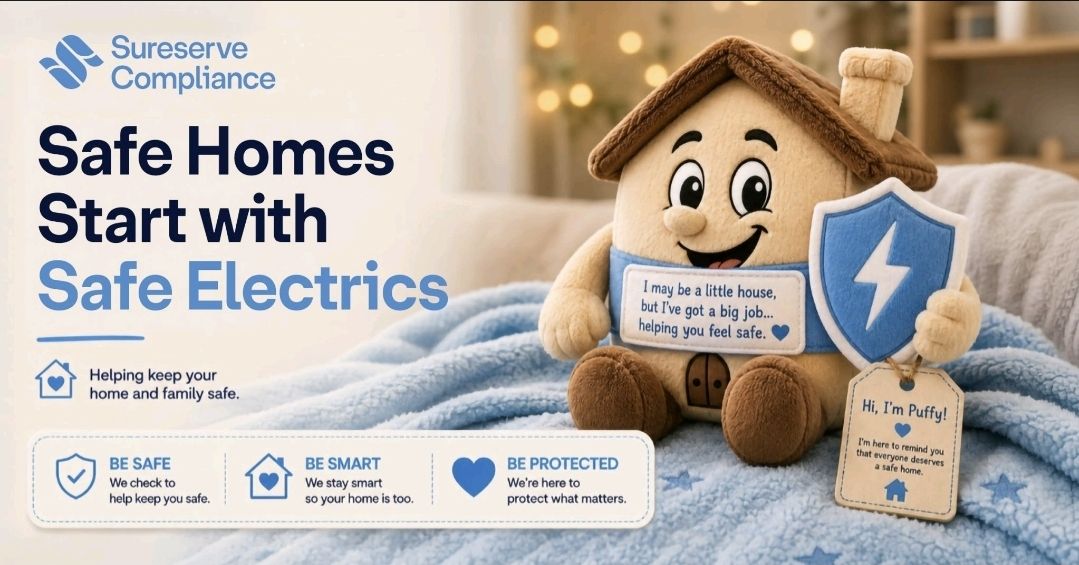
For the past two years, our Healthy Homes Check campaign has tried to address that gap. We are now preparing to take one of the central characters from the two-dimensional world of the campaign and develop him into something more substantial. His name is Puffy. Puffy is a 1950s-style cartoon house who is getting older, slightly out of shape and trying to become healthier. He is not a mascot created because somebody thought the campaign needed to be made more cheerful. He was born from a deeper human insight: the properties managed by the remarkable people working in social housing are frequently discussed as problems, units, assets, liabilities or stock. To the people living in them, they are homes. That tension and difference is the strategic opportunity. Behind the word “stock” are millions of homes in need of care to be safe.
England has around 4.2 million social rented dwellings. According to the latest “English Housing Survey” (https://www.gov.uk/government/statistics/chapters-for-english-housing-survey-2024-to-2025-headline-findings-on-demographics-and-household-resilience/chapter-1-profile-of-households-and-dwellings), 29 per cent of them were constructed between 1945 and 1964. That equates to approximately 1.2 million post-war social homes from that period alone. This is not an accidental feature of the housing landscape. It is the physical legacy of one of the most ambitious periods of public housebuilding in British history.
After the Second World War, governments faced severe housing shortages, bomb damage, overcrowding and poor-quality urban accommodation. The response was a major expansion of council housing intended to provide families with better facilities, more space and, crucially, homes free from many of the problems associated with the housing they replaced. London carries an especially visible part of that history. Estates such as Churchill Gardens in Pimlico and the Alton Estate in Roehampton represented ambitious attempts to create modern, well-designed communities. Many of these homes were innovative and desirable when first built. They were designed for the lives, technologies, climate expectations and building standards of their time.
Seventy years later, the challenge is not that these homes have somehow failed. It is that buildings, like people, need care as they age.
Insulation deteriorates or becomes inadequate for modern expectations. Heating systems need replacing. Ventilation, windows, roofs and electrical systems require attention. New technologies have to be integrated into structures that were never designed for them. Climate change is placing different demands on buildings, while residents rightly expect their homes to be warm, and more recently cool, affordable, safe and healthy.
That is the truth Puffy makes visible. He is not a “problem property”. He is an ageing home that needs a health plan.
Why a character can do what a technical message cannot
Character-led marketing is sometimes treated as the lighter end of the discipline. The serious people handle propositions, segmentation, regulation and commercial strategy. The character arrives later, normally carrying a speech bubble and a request to make the campaign feel “more engaging”. That misunderstands the strategic value of a well-designed character. A character gives an abstract problem an identifiable agent. It creates continuity between messages that might otherwise feel disconnected. It allows complex information to be expressed through situations, emotions and consequences rather than through an expanding collection of diagrams. Most importantly, it gives the audience something stable to recognise while the messages around it develop. Consumer psychology describes part of this process as anthropomorphism: our tendency to attribute human characteristics, intentions and emotions to non-human things. Research published in the Journal of Consumer Research has shown that people evaluate anthropomorphised products through familiar human schemas, while subsequent research has demonstrated that humanising brands can influence attitudes and behaviour.
This does not mean that adding eyes to a boiler will magically increase engagement.
Character works when the human qualities are congruent with the problem, the audience and the action required. Puffy works because an ageing house getting fitter is a natural translation of the challenge. We already understand check-ups, warning signs, treatment plans, prevention, recovery and ongoing health. The metaphor reduces the cognitive effort required to understand the category. Retrofit becomes getting a home back into shape. A property assessment becomes a health check. Planned maintenance becomes prevention rather than repair. A collection of safety and energy services becomes one coherent programme for creating a healthier home. This is not dumbing the subject down. It is removing unnecessary complexity so that the importance of the subject can be understood. The evidence for making difficult information human.
The value of humanisation is not confined to advertising theory
Evidence from health communication shows that stories can improve engagement with difficult information and influence knowledge, attitudes and behaviour. Reviews of narrative interventions suggest that identification, realism and emotional connection can help people understand both the relevance of a problem and the actions available to them. That matters in a low-engagement category. Most people do not wake up eager to learn about building condition, housing hazards or energy-performance measures. Social housing professionals may understand the operational significance, but they are also managing competing priorities, limited budgets, changing regulation, resident expectations and the practical reality of delivering work inside people’s homes. Facts remain essential, but information alone does not guarantee attention or action.
A character can create a route into the information. Puffy can experience excess cold, struggle with poor ventilation, discover an electrical problem or prepare for a Healthy Homes Check. Each story provides a recognisable starting point from which the evidence, regulation and required action can be explained.
The character does not replace the technical case. He carries people towards it
Awaab’s Law changes the urgency, not the underlying insight. The development of Puffy is particularly relevant as the requirements of “Awaab’s Law” (https://www.gov.uk/government/publications/awaabs-law-guidance-for-social-landlords/awaabs-law-guidance-for-social-landlords-timeframes-for-repairs-in-the-social-rented-sector) expand. The first phase came into force on 27 October 2025, introducing fixed requirements for social landlords to address emergency hazards and significant damp and mould hazards. From 30 November 2026, the second phase expands the regulations to significant risks involving excess cold and heat, falls, structural collapse, explosions, fire, electrical hazards, domestic and personal hygiene and food safety. Further hazards are due to enter scope in 2027. These requirements are not abstract. In 2024, physical inspections recorded damp problems in 7 per cent of social rented dwellings, equivalent to close to 300,000 homes when applied to the national stock estimate. The same English Housing Survey found that 41 per cent of social renting households reported experiencing some form of condensation, damp or mould, illustrating the much wider scale of resident concern and experience. The difference between the two figures reflects the distinction between surveyor-observed significant problems and what residents themselves encounter and report.
Both matter.
Awaab’s Law rightly creates a legal backstop when hazards are not addressed quickly enough. But compliance language alone is unlikely to create the cultural shift the sector needs. Regulations can specify when an investigation must happen and how quickly action must be taken. They cannot, by themselves, ensure that every resident feels heard, that every warning sign is recognised early or that teams across different service areas understand how their work contributes to the same outcome. Puffy gives that outcome a recognisable face. He can connect damp and mould, heating, ventilation, fire safety, electrical compliance, gas, water hygiene, energy efficiency and retrofit through one simple proposition: every resident deserves a safe and healthy home.
What Donkey, Captain Aquafresh and the Nurdles taught me
I have seen and created the strategic value of character-led communication before. Listerine’s Donkey gave a functional and easily ignored oral-care behaviour a distinctive voice. Mouthwash is not naturally a high-interest category. Donkey allowed the brand to interrupt the familiar brushing and flossing routine with humour and personality. His later return demonstrated an important principle of brand building: a recognised character is not merely an old advertising execution. It is a memory asset that can be reactivated rather than rebuilt from zero. A subsequent Donkey digital activation reported more than 173,000 visitors, 123,000 entries and 78,000 new subscriptions. Those numbers were generated not simply by placing a character on the page, but by connecting an established asset with participation, retail activation and data capture. Captain Aquafresh and the Nurdles tackled a different behavioural challenge. Oral-health messages about sugar acids, plaque, decay and two-minute brushing are important but hardly irresistible to children. A superhero, a group of colourful sidekicks and a clearly defined enemy converted oral care into a story with a mission. The characters provided a framework that could move across advertising, packaging, education and the brushing experience itself. Captain Aquafresh and Lily, Billy and Milky remain part of the brand’s communication today, demonstrating how a character system can organise multiple messages around a stable and recognisable idea.
These experiences shaped my view that character is most powerful when it is not treated as a campaign ornament. It should have a defined strategic job. It should make a behaviour easier to understand, give the brand a consistent role and create a memory structure that can accumulate value over time.
From a drumming gorilla to a family of meerkats
Two of the best-known examples in modern advertising demonstrate that a character does not need to explain the product literally to transform the fortunes of a brand. Cadbury’s Gorilla did not discuss cocoa content, manufacturing quality or the functional superiority of Dairy Milk. It dramatised anticipation and joy. At the start of 2007, Dairy Milk was entering its third year of decline and had lost relevance with younger consumers. In the month the Gorilla campaign launched, value sales increased by 5 per cent year on year, compared with a 7 per cent decline earlier in the year. The gorilla was memorable because it embodied what eating chocolate felt like, rather than explaining what chocolate was or why Cadbury chocolate was better.
Compare the Market’s meerkats solved another low-engagement problem. Price comparison is useful, but insurance research is not a category most people approach with excitement. The creative leap from “market” to “meerkat” created characters, language and a fictional world that people actively remembered. Aleksandr and Sergei became far more than mascots. They became distinctive brand assets capable of supporting advertising, customer rewards, digital experiences and years of narrative development. The business had been struggling with expensive search advertising and stronger competitors when the campaign began in 2009. According to the IPA, the subsequent growth made Compare the Market around three times the size of its competitors. The characters remain central to the brand more than 15 years later.
The Gorilla and the meerkats worked differently. One was a culturally explosive expression of emotion. The other became a long-running brand world. Both demonstrate the same strategic principle: people remember meaning more readily when it is expressed through character, emotion and story.
The Nicorette parallel: insight before execution
This is also the connection to my previous work with Nicorette. As I discussed in “When Marketing creates opportunities that Change Behaviour, Categories Grow” (https://mharicoxonmarketing.com/2026/07/11/when-marketing-creates-opportunities-that-change-behaviour-categories-grow-and-good-stuff-happens/), the central challenge was not that smokers were unaware of the health risks. More information about harm was unlikely to close the behaviour gap. The deeper insight was that people who had tried to stop before often carried a sense of failure. Another quit attempt felt like another opportunity to prove they could not do it. The strategic opportunity was to remove shame and reposition a previous attempt as part of the journey towards eventual success. The work needed to connect a human truth for the smoker with clinical confidence for healthcare professionals and an economic case for procurement. That approach contributed to a 26 per cent increase in NHS prescribing share. In hindsight, I should have characterised that insight for even wider impact.
Puffy comes from the same school of strategic thinking. The category language says retrofit, compliance, hazard remediation and asset improvement. The human insight says this is someone’s home, it is getting older and it needs help to remain healthy.
Once the human insight is clear, the communication platform becomes simpler, more distinctive and more flexible.
A character built to survive political change
Housing policy is exposed to frequent changes in political language, funding mechanisms, regulatory emphasis and ministerial priorities. One year the dominant conversation may be decarbonisation. The next may focus on damp and mould, building safety, affordability, fuel poverty or economic growth. All are important, but campaigns built entirely around the policy terminology of the moment can age quickly. Puffy has the potential to survive that cycle because he is not built around a funding stream or a political slogan. He is built around the resident and the home.
Governments can change. Programme names can change. Regulations will continue to evolve.
The underlying human requirement remains remarkably stable: people need homes that are safe, warm, soon to include cool, efficient and healthy. That gives Puffy strategic breadth. He can explain why a Healthy Homes Check matters before a problem becomes urgent. He can help residents understand what will happen during a visit. He can connect services that may appear separate inside an organisational structure but are experienced together inside the home. He can support conversations with housing professionals, residents, policymakers and partners without changing his fundamental role. He creates a resident-centred organising idea for a technically fragmented category.
Character must never trivialise the issue
There is, of course, a responsibility attached to using character in a category involving health, safety and people’s homes. Puffy must never make hazardous housing conditions appear harmless. He must not shift responsibility towards residents or suggest that serious problems are simply the amusing consequences of an elderly house getting tired. Humour can make the communication approachable, but the evidence, urgency and required actions must remain clear. His personality must also be governed as carefully as any other strategic brand asset. What does Puffy understand? What is he worried about? Who helps him? How does he speak about residents? How does he respond when a problem is serious? Which services and messages legitimately belong in his world?
Without those rules, a character becomes inconsistent and gradually loses meaning. With them, Puffy can become a coherent communication platform rather than an endlessly redrawn cartoon. The strongest brand characters are not merely recognisable. They are strategically disciplined.
Puffy is not a mascot for retrofit
Puffy represents a larger belief about marketing.
Our role is not simply to make complex language slightly more attractive. It is to find the human truth underneath that language and build a route between the two.
We have to understand the evidence, regulation, commercial model, operational reality and audience behaviour, then create an idea capable of holding them together. Puffy can make an ageing house relatable. He can make a collection of technical services feel like a coherent plan. He can help the sector talk about homes rather than problems and residents rather than units. He can provide continuity while policy priorities change and create a distinctive platform that becomes more valuable with consistent use. Most importantly, he keeps the end user visible. Because retrofit is not ultimately about buildings. It is about helping people live safely, warmly and well in the places they call home. That is not making a technical category less serious. It is remembering why the category matters in the first place.

You must be logged in to post a comment.